




ISLAMABAD, (Climate Change Desk): Single-use plastics continue to dominate household waste in Islamabad despite the implementation of the Single-Use Plastics (Prohibition) Regulations, 2023, with weak enforcement emerging as a major obstacle to reducing plastic pollution in the capital.
A survey conducted by The Network found that more than 60% of household garbage in Islamabad consists of polythene bags, while around 30% comprises plastic bottles, highlighting the continued widespread use of single-use plastics despite the regulatory framework.
Nadeem Iqbal, CEO of The Network, said the findings demonstrate that the problem is no longer primarily about public awareness but about enforcement.
“This is not an issue of awareness but one of enforcement,” Nadeem Iqbal said.
He stressed that the law is already in place, but insufficient enforcement is preventing it from producing the desired results.
“The survey clearly shows that awareness exists, but without strict enforcement of the plastic ban, Islamabad will continue to suffer from the harmful effects of plastic pollution. It’s time for the authorities to shift focus from awareness campaigns to ensuring compliance with the law,” he said.
Survey Shows Continued Dependence on Single-Use Plastics
The survey randomly selected 52 households from approximately 184,971 urban households in Islamabad. It was conducted with an 85% confidence level and a 10% margin of error.
The findings showed that 56% of respondents were aware of the 2023 regulations prohibiting single-use plastics. However, the continued presence of plastic bags and bottles in household waste suggests that awareness has not translated sufficiently into behavioral change or effective compliance.
Only 25% of respondents said they make sure their household plastic waste is recyclable or reusable, while around 40% said they do not.
The survey also found that approximately 60% of households generate between one and more than five kilograms of plastic waste every week, despite growing awareness of the environmental damage caused by plastic.
Residents Show Willingness to Reduce Plastic Use
The findings also revealed a positive trend, with many residents expressing willingness to adopt alternatives.
Around 75% of respondents said they believed they could reduce their daily plastic consumption and expressed a preference for using cloth or recyclable bags.
The results indicate that residents are willing to adopt more sustainable consumption practices if suitable alternatives are accessible and regulations are effectively implemented.
What the 2023 Plastic Regulations Say
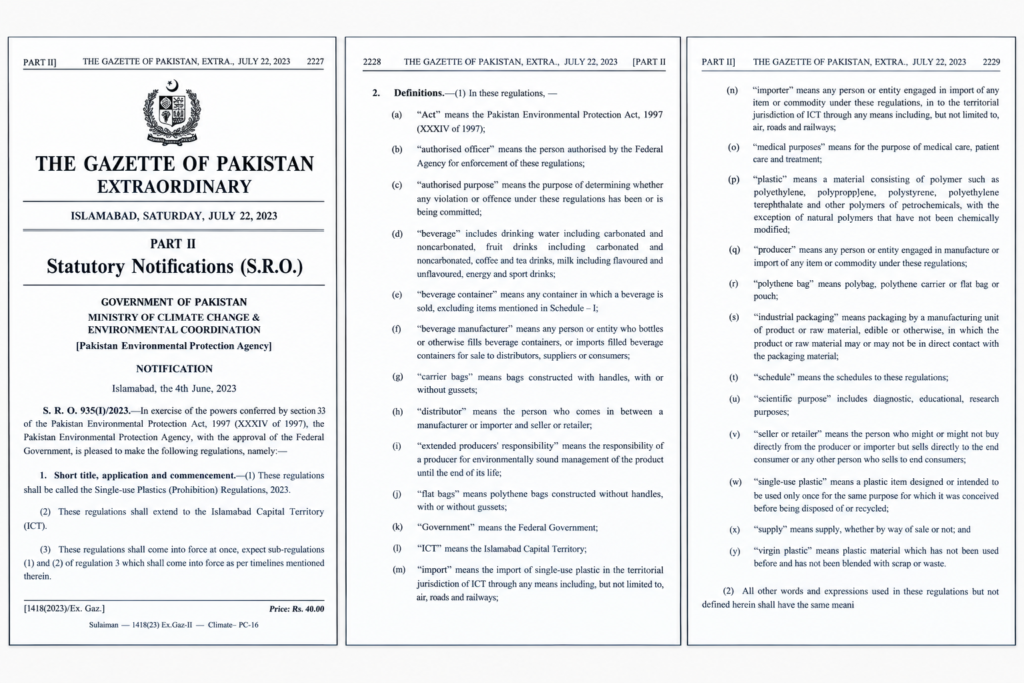
The Single-Use Plastics (Prohibition) Regulations, 2023 apply to the Islamabad Capital Territory and prohibit the manufacture, import, distribution, sale and use of specified single-use plastic products.
Under the phased approach, some items, including polythene bags, plastic crockery and plastic products used for food services, were subject to immediate prohibition. Drinking straws were given a later deadline, while certain plastic beverage containers were allowed under the regulations until 2028.
The rules also establish Extended Producer Responsibility (EPR), requiring producers to take responsibility for the collection, recycling and disposal of plastic waste and to maintain relevant records.
Certain exemptions are provided for medical and industrial uses.
Enforcement Remains the Key Challenge
The Pakistan Environmental Protection Agency is responsible for enforcing the regulations in the Islamabad Capital Territory. Violations can attract penalties under the Pakistan Environmental Protection Act, including fines and confiscation.
The regulations also call for awareness campaigns, promotion of alternatives and improved disposal practices.
However, The Network’s survey suggests that simply informing residents about the ban is not enough.
The organization argues that stronger monitoring of manufacturers, sellers and users, combined with consistent penalties and accessible alternatives, is needed to reduce the volume of single-use plastics entering Islamabad’s waste stream.
The Network conducted the survey as part of Global Green Action Week, held in October to promote sustainable consumption through a sharing-community approach. The project is managed by the Swedish Society for Nature Conservation.