




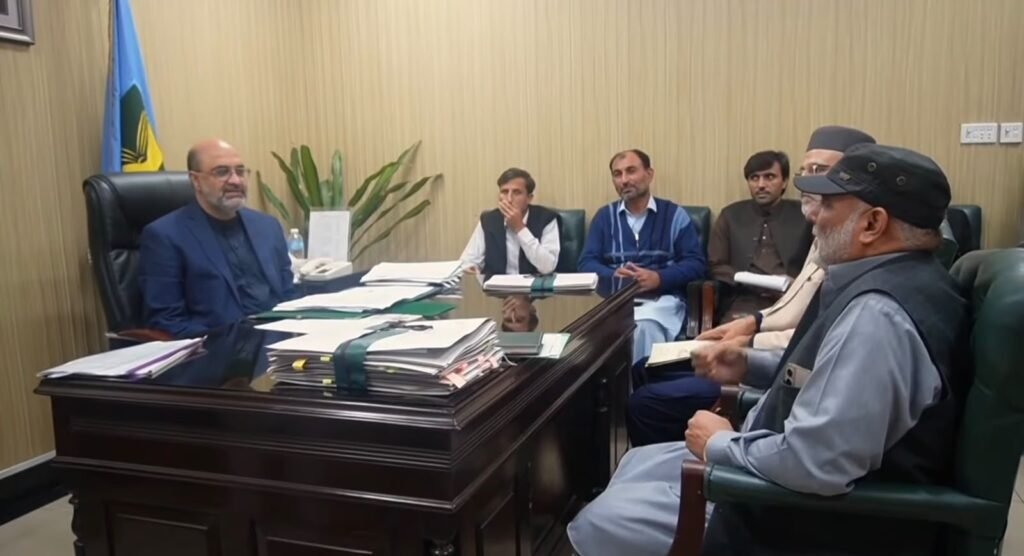
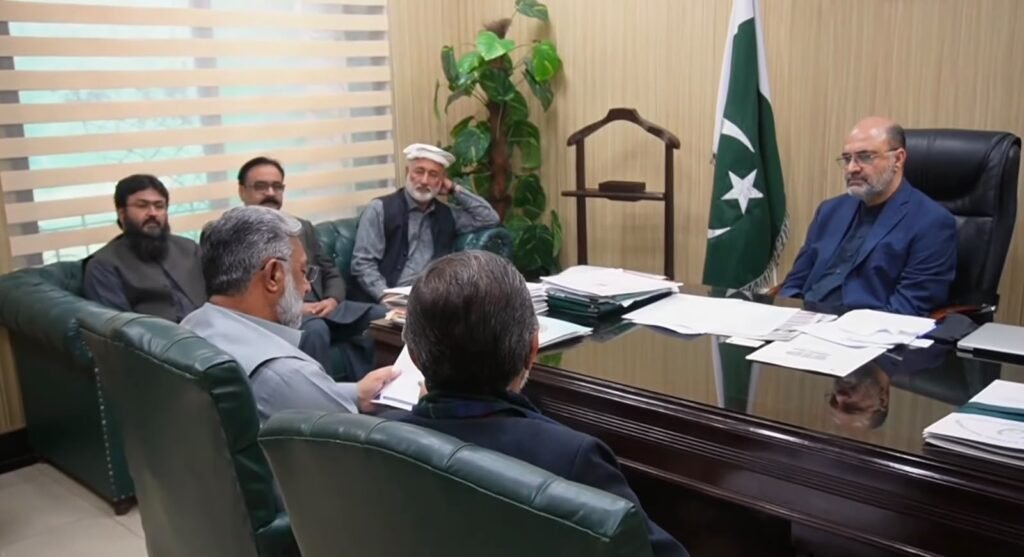
PESHAWAR: Khyber Pakhtunkhwa Governor’s Adviser on Education and Social Welfare, Dr Aamir Abdullah, has held separate meetings with delegations of the All Pakistan Teachers Association and the Private Education Network Khyber Pakhtunkhwa to discuss educational reforms, teachers’ service matters and challenges facing public and private educational institutions.
During his meeting with the All Pakistan Teachers Association delegation, discussions focused on academic development in universities and other educational institutions, teachers’ service-related issues, and problems faced by faculty members working under the Tenure Track System (TTS).
The delegation included Dr Aamir Atiq, Professor Dr Kamran, Shaukat Khattak, Dr Khurshid and other representatives. The members also invited the education adviser to attend an upcoming policy roundtable organised by their association, which will bring together university vice-chancellors, students and other key education stakeholders.
Dr Aamir Abdullah listened to the delegation’s concerns and suggestions and assured them that possible measures would be taken on practical recommendations. He also briefed the participants on recent initiatives and future plans for improving the education sector and strengthening universities.
The adviser emphasised the need for universities to overcome financial difficulties by reducing unnecessary expenditures, using available resources efficiently and exploring alternative sources of income.
He said universities must move beyond traditional approaches and introduce innovative solutions to improve their financial sustainability.
He further stressed that universities should focus on practical skills, employment opportunities and market requirements rather than limiting their role to issuing degrees. New academic programmes should be designed to improve graduates’ employability.
Teacher Shortage and Recruitment Plans
Discussing school education, Dr Abdullah revealed that government schools across the province are facing a shortage of approximately 45,000 teachers.
He said recruitment of 7,000 teachers is currently underway, while plans are also being considered to recruit another 7,000 teachers. Candidates from adjoining union councils who meet merit requirements, followed by eligible candidates on the second merit list of the relevant union councils, will be considered.
He added that improvements to the recruitment policy had also been directed to facilitate the process. In addition, the government is planning to fill 10,000 teaching vacancies through a flexible hiring mechanism.
The adviser said relevant authorities had also been instructed to ensure timely payment of salaries to teachers working in double-shift schools.
He further stated that college IT laboratories were being equipped with scientific instruments and modern facilities, while similar facilities would also be provided in schools.
A new five-year education plan is also being prepared, covering teachers’ professional development, training and measures to improve the overall quality of education.
Teachers Call for Transparent University Appointments
During the meeting, the teachers’ delegation stressed the importance of academic integrity and transparency in university appointments.
It proposed introducing clear procedures for appointing heads of academic departments to prevent ambiguity and administrative uncertainty in cases where appointment decisions are reconsidered or withdrawn.
The delegation also suggested introducing a formal certification system for the teaching profession.
In response, Dr Abdullah asked the representatives to submit their proposals and recommendations in writing so they could be reviewed by the relevant forum and considered for future policymaking.
He reiterated the government’s commitment to strengthening universities, addressing teachers’ professional concerns and improving educational standards through consultation with all relevant stakeholders.
Private Education Network Raises Examination and Admission Concerns
In a separate meeting, a delegation of the Private Education Network Khyber Pakhtunkhwa discussed issues affecting private educational institutions with the education adviser.
The delegation included Saleem Khan, Ahmed Gul and other representatives. Managing Director of the Khyber Pakhtunkhwa Private Schools Regulatory Authority (PSRA), Javed Iqbal, was also present.
The representatives highlighted difficulties faced by students due to differences between examination schedules and result announcements by educational boards in Khyber Pakhtunkhwa and Punjab.
They said delays in examinations and results in KP compared with Punjab prevent students, particularly those from summer and winter zones, from meeting admission deadlines at universities in Punjab and other parts of the country.
The delegation warned that these delays could affect students’ opportunities to pursue higher education.
Taking notice of the issue, Dr Abdullah directed the Secretary of Elementary and Secondary Education to examine the matter and identify a practical solution.
The delegation also presented proposals regarding teacher training and possible financial support for private educational institutions through the Elementary and Secondary Education Foundation. The adviser asked the representatives to submit their recommendations in writing for consideration.
Soft Loan Scheme Proposed for Private Schools
Dr Abdullah also invited private educational institutions to actively participate in the process of acquiring government schools being handed over to the private sector.
He said the government wanted to encourage private educational institutions and create a supportive environment for their growth.
As part of these efforts, the government has requested the Bank of Khyber to introduce a soft loan scheme on easy terms for private educational institutions.
The proposed financial facility would help institutions strengthen their educational and business infrastructure.
The adviser assured the delegation that its concerns and recommendations would be reviewed and appropriate measures taken through the relevant authorities.
Both meetings focused on improving educational standards, addressing institutional and teachers’ concerns, and strengthening cooperation between the government, universities and the private education sector.