




ISLAMABAD: Pakistan and Turkmenistan have agreed to accelerate technical cooperation on a major electricity transmission project linking Central and South Asia, while exploring new regional power routes to meet Pakistan’s growing energy demand.
The understanding was reached during a meeting between Turkmenistan’s Minister of Energy Annageldi Saparov and Pakistan’s Federal Minister for Energy (Power Division) Sardar Awais Ahmad Khan Leghari in Islamabad, where both sides discussed bilateral energy cooperation, cross-border electricity transmission and regional grid connectivity.
A key focus of the discussions was the Turkmenistan-Afghanistan-Pakistan (TAP) power transmission project, which aims to supply electricity from Turkmenistan through Afghanistan to Pakistan.
Leghari invited Turkmenistan to join the Central Asia-South Asia Electricity Transmission and Trade Project (CASA-1000), which is designed to facilitate electricity trade between Central and South Asian countries.
He said Pakistan had also encouraged Tajikistan and Kyrgyzstan to explore extending the CASA-1000 transmission network towards Uzbekistan and Turkmenistan to expand regional electricity exchange.
Highlighting Pakistan’s future energy requirements, the minister said the development of industrial and commercial activities in Gwadar was expected to generate a substantial increase in electricity demand.
He proposed that Iran and Turkmenistan examine the possibility of increasing electricity supplies to Gwadar through Iran’s power transmission network. A joint group of experts from the relevant countries could assess the proposal and its technical feasibility.
Leghari said Pakistan remained committed to integrating regional energy markets and ensuring affordable electricity for consumers, stressing that the economic and financial viability of cross-border energy projects was essential for their long-term success.
He also noted that Pakistan currently had surplus electricity generation capacity and was moving towards a competitive electricity market.
Discussing CASA-1000, the minister highlighted the potential benefits of converting its existing one-way electricity transmission arrangement into a two-way system. Such an arrangement, he said, could enable participating countries to exchange electricity according to seasonal and operational requirements, improving the project’s commercial sustainability.
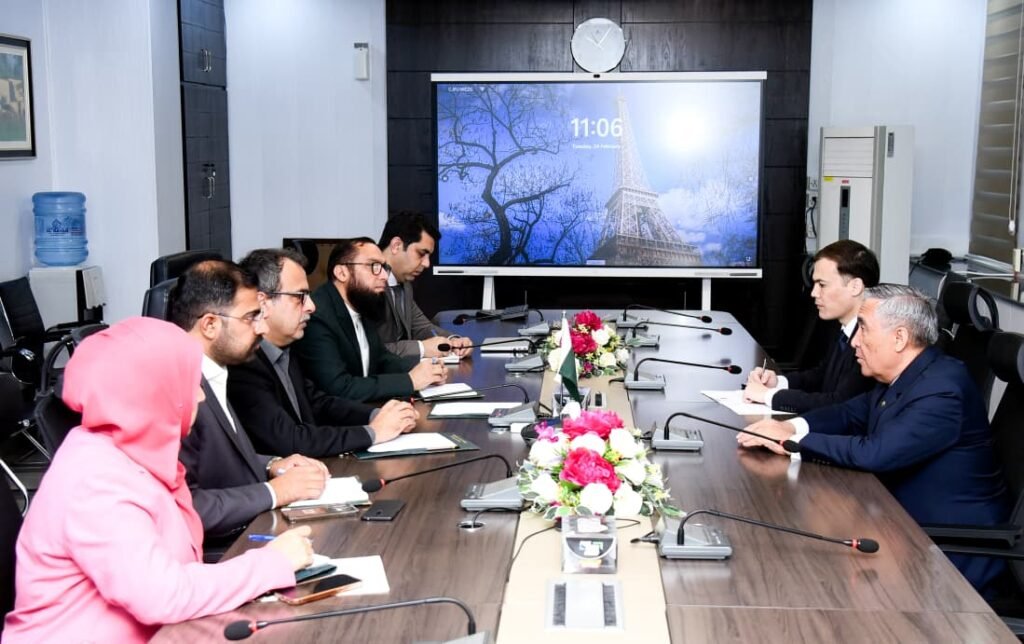
TAP Project Technical Work to Be Accelerated
Regarding the TAP transmission project, Leghari said seven essential technical data sets were required to advance the initiative, of which Pakistan had already submitted three.
He urged Turkmenistan to expedite the provision of the remaining technical information and proposed an early meeting between the two countries’ technical working groups to establish a clear implementation roadmap within the coming weeks.
Turkmenistan’s Energy Minister Annageldi Saparov reaffirmed his country’s commitment to completing the TAP project and thanked the Pakistani government for its hospitality.
He said Turkmenistan had already completed the installation of the transmission line up to Afghanistan, while the remaining stages and feasibility assessment would be pursued through technical consultations.
Saparov said the proposed 1,150-kilometre transmission link from Afghanistan to Quetta would operate at 500 kilovolts, with a planned capacity of 1,200 megawatts. He also highlighted the project’s potential to provide electricity to more than 300 million people across the region.
The Turkmen minister welcomed the technical information shared by Pakistan and assured that his country would provide the remaining required data soon.
He further pledged to personally oversee efforts to resolve outstanding issues concerning the project.
Both sides agreed to maintain regular online and in-person communication between their designated focal persons to address technical challenges, complete the feasibility study and move the project towards implementation.
At the conclusion of the meeting, Pakistan and Turkmenistan reaffirmed their commitment to expanding bilateral energy cooperation and strengthening regional electricity connectivity through commercially viable cross-border projects.