




By : Our Correspondent
ISLAMABAD: Despite constitutional guarantees of free education, Pakistani families are spending at least Rs5,899 every month to keep their daughters enrolled in public secondary schools, highlighting the financial barriers that continue to prevent girls from accessing education.
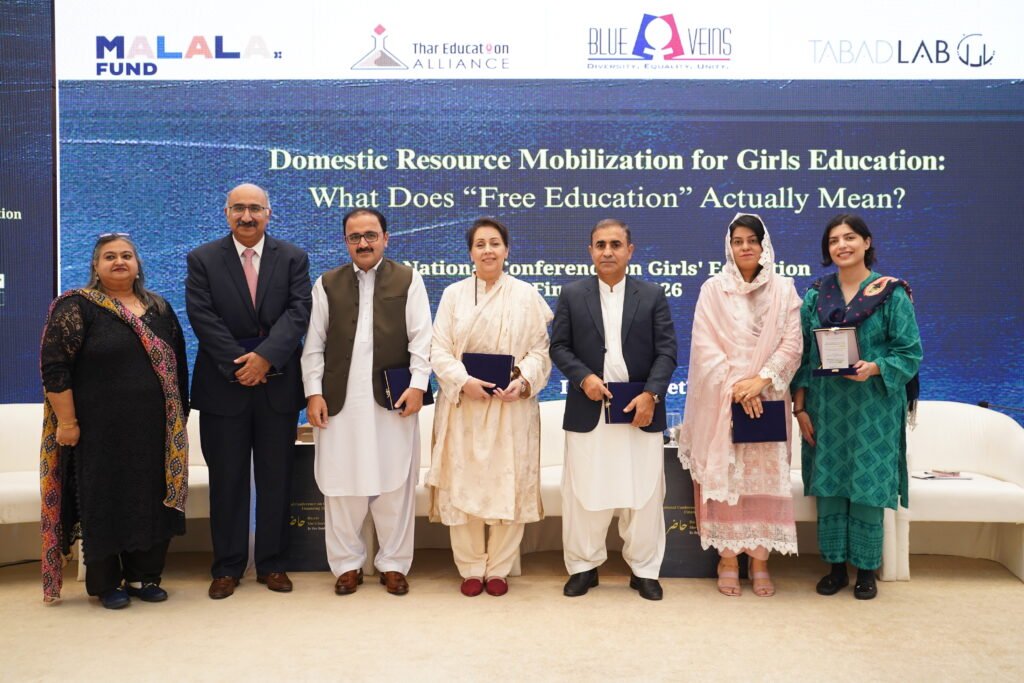
The findings were shared at the National Girls Education Financing Conference 2026, held in Islamabad under the theme “Hazir: She’s Here. Is the Budget?” The event was organised by the Pakistan Coalition for Education (PCE) in collaboration with the Malala Fund.
The conference brought together education experts, policymakers, legislators and young girls to examine the growing gap between government education spending and the actual costs families face to ensure their daughters remain in school.
According to the discussions, households spend an average of 13 per cent of their income on keeping a daughter in a public secondary school, raising concerns about whether education can truly be considered free when families continue to shoulder such significant expenses.
Addressing the conference, Dr Nishat Riaz, Chief Executive Officer of Malala Fund, stressed that education budgets must reflect the actual costs of keeping girls in classrooms.
She said governments needed to address the overlapping financial and social barriers that affect girls’ access to education, participation and continuation in school. She also called for innovative financing approaches and fairer budget allocations to ensure that public investment creates meaningful opportunities for girls.
Zehra Arshad, Executive Director of the Pakistan Coalition for Education, said declining public investment in education had increasingly shifted the financial burden onto families.
She pointed out that these household expenses remained largely absent from official education budgets, despite directly affecting girls’ ability to continue their studies.
“When families bear the cost, the right to education stops being a right and becomes a compromise,” she said, emphasising the need for education policies that account for the real expenses of schooling.
The conference also provided a platform for girls to share their personal experiences. During a girl-led panel discussion, secondary school students known as Girl Champions described the financial and other challenges that make it difficult for girls to enrol in and remain in school.
The session was chaired by MNA Asia Naz Tanoli, who called for reducing the financial burden on households, improving school facilities and increasing public investment in education.
A separate policy discussion examined how governments could mobilise domestic resources to make free education meaningful in practice. Representatives from federal and provincial education departments shared their efforts to increase public investment during the 2026-27 fiscal year, while acknowledging that limited budgets continued to hinder progress.
Punjab Parliamentary Secretary for Education MPA Nausheen Adnan highlighted the need for greater understanding of education financing among legislators and senior policymakers. She also called for decentralising the education system to empower local stakeholders to make decisions based on the specific needs of their communities.
A major highlight of the conference was the launch of a research report titled “The Real Cost of Educating a Daughter: Out-of-pocket Costs of Girls’ Secondary Education in Pakistan’s Public Schools.”
The study highlighted the financial reality behind the promise of free education, finding that families must spend at least Rs5,899 per month to keep a daughter in a public school.
Participants stressed that education financing must go beyond enrolment targets and address the actual costs associated with attendance, participation and completion.