




ISLAMABAD: Turkmenistan has expressed its willingness to supply natural gas to Pakistan at concessional rates through the Turkmenistan-Afghanistan-Pakistan-India (TAPI) gas pipeline, with Ambassador Atadjan Movlamov describing energy cooperation as a promising area for strengthening economic relations between the two countries.
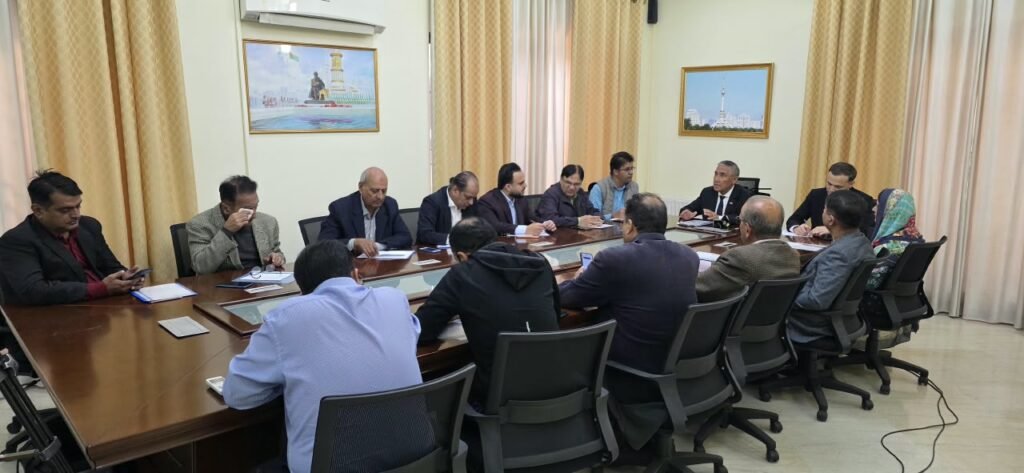
Speaking at a press briefing at the Embassy of Turkmenistan in Islamabad, Ambassador Movlamov shared details of his country’s recent regional diplomatic engagements and discussed opportunities for expanding cooperation with Pakistan in energy, transportation, trade and other sectors.
He said Pakistan’s energy shortages and high energy prices made cooperation with Turkmenistan particularly important, adding that the TAPI pipeline remained a flagship project for delivering natural gas to Pakistan and neighbouring countries.
According to the ambassador, access to relatively inexpensive natural gas could benefit Pakistan in several ways, including reducing energy costs for households, providing affordable fuel to industries and lowering the cost of electricity generation.
He further said the TAPI project included an additional package comprising a 1,635-kilometre fibre-optic link and 3,000 megawatts of electricity.
Expressing optimism about the project’s completion, Movlamov said all four participating governments supported the initiative. He described TAPI as not merely an energy project but also a potential guarantee of regional peace and cooperation.
The ambassador also highlighted Turkmenistan’s Galkynysh gas field, saying it held reserves of more than 27 trillion cubic metres, making it one of the world’s largest natural gas fields. He said Turkmenistan was interested in supplying gas to Pakistan and other neighbouring countries.

Movlamov said the section of the pipeline extending to Herat in Afghanistan was expected to be completed during the current year, after which gas supplies would begin.
Turkmenistan Calls for Dialogue Between Pakistan and Afghanistan
Responding to a question about tensions and the closure of the Pakistan-Afghanistan border, the ambassador emphasised Turkmenistan’s commitment to neutrality and peaceful diplomacy.
He said his country advocated dialogue as the preferred way to resolve disputes, stressing that neighbouring countries had to coexist and that political disagreements should not disrupt infrastructure development or humanitarian assistance.
Referring to the humanitarian situation in Afghanistan, Movlamov said regional disputes should not prevent the continuation of essential assistance and infrastructure-related activities.
Lapis Lazuli Corridor Offers Trade and Transit Opportunities
The ambassador also discussed Turkmenistan’s potential as a regional transportation and transit hub, highlighting the Lapis Lazuli Corridor as an important international trade route.
The corridor connects Afghanistan with Europe through Turkmenistan, crossing the Caspian Sea between Turkmenbashi and Baku before passing through Georgia, including Tbilisi, Poti and Batumi, and entering Turkey through Kars and Istanbul.
The route provides landlocked Afghanistan with access to international markets and offers opportunities to expand regional trade, transportation and economic connectivity.
Turkmenistan Hosts Three Major Regional Summits
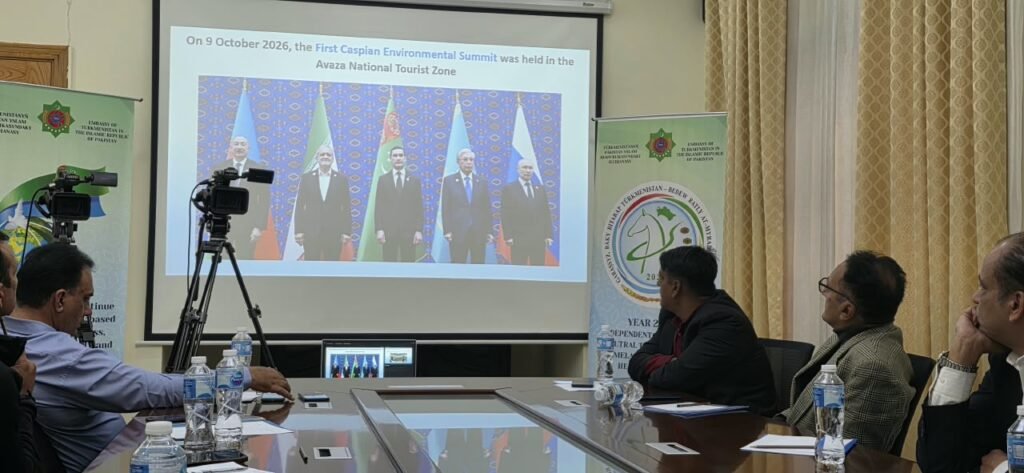
During the briefing, Ambassador Movlamov also outlined the outcomes of three high-level regional meetings held from October 8 to 10, 2026, in the Avaza National Tourist Zone on the Caspian Sea coast.
He said Turkmenistan hosted 10 heads of state, including nine presidents from the Eurasian, Commonwealth of Independent States (CIS), Caspian and Central Asian regions, alongside other senior representatives.
President Serdar Berdimuhamedov hosted the meetings, which brought together leaders and representatives from Azerbaijan, Belarus, Iran, Kazakhstan, Kyrgyzstan, Tajikistan, Uzbekistan and Armenia.
The discussions covered regional security, energy, transportation, environmental challenges, industrial cooperation, technology and future economic opportunities.
Central Asia and Azerbaijan Consultative Meeting
The 8th Consultative Meeting of the Heads of State of Central Asia and Azerbaijan, also known as the C6 Summit, was held on October 8.
The participating leaders discussed strengthening regional cooperation, security, technological development, artificial intelligence and cultural relations.
A major focus was expanding the Middle Corridor, also known as the Trans-Caspian International Transport Route, to improve trade and transportation links between Central Asia, Azerbaijan and Europe.
The discussions also included East-West and North-South transportation and energy corridors, transboundary water management and possible cooperation frameworks concerning the Amu Darya and Syr Darya rivers.
First Caspian Environmental Summit
The First Caspian Environmental Summit was held on October 9 to address the environmental and economic challenges facing the Caspian Sea.
Leaders discussed the declining water level of the sea, which has been linked in the supplied briefing to reduced river inflows, climate change and human activities.
The declining water level was described as a serious environmental, economic and regional security concern.
One of the key outcomes was an agreement to establish a joint five-party commission to examine the causes of the falling water level and coordinate possible responses.
The proposed commission will involve representatives from Azerbaijan, Kazakhstan, Turkmenistan, Iran and Russia, with expert working groups expected to support its work.
CIS Leaders Discuss Economic and Security Cooperation
The CIS Council of Heads of State meeting also took place on October 9, marking the 35th anniversary of the Commonwealth of Independent States.
According to the ambassador, participating leaders signed a joint statement commemorating the anniversary of the Alma-Ata Declaration and the founding agreement of the organisation.
The discussions focused on expanding trade and economic integration, industrial cooperation, scientific and technological development, economic security and international engagement.
Earlier, on October 7, the CIS Council of Foreign Ministers had met at the Avaza National Tourist Zone under Turkmenistan’s 2026 CIS chairmanship. The meeting was chaired by Turkmenistan’s Foreign Minister Rashid Meredov.
The subsequent leaders’ gathering included an expanded format featuring Iranian President Masoud Pezeshkian and focused on regional economic cooperation and environmental challenges affecting the Caspian Sea.
Regional Trade Target Set at €17 Billion
Ambassador Movlamov said the participating countries were committed to strengthening economic ties despite geopolitical and economic challenges.
He highlighted the importance of mutual respect, equality and mutually beneficial cooperation, noting that regional connectivity, industrial partnerships and digital technology were central themes of the discussions.
According to figures cited during the summit, trade among participating states reached approximately €11.6 billion last year, representing around eight per cent of their combined total trade.
The leaders set a target of increasing regional trade to at least €17 billion.
The ambassador said the discussions in Avaza reflected a shared interest in developing transportation corridors, strengthening energy cooperation, expanding industrial production and improving regional connectivity.
For Pakistan, the developments present potential opportunities to deepen economic engagement with Turkmenistan, particularly through energy cooperation, the TAPI pipeline and regional trade and transit routes.