




KABUL: Armed resistance groups opposing Afghanistan’s Taliban authorities have reported an increase in attacks across seven provinces over the past week, claiming that at least 30 Taliban personnel were killed and 13 others wounded, while a helicopter was also destroyed. The reported incidents span Panjshir, Badakhshan, Nuristan, Kapisa, Kandahar, Helmand and Bamyan.
According to statements attributed to several anti-Taliban groups, the reported operations targeted Taliban military positions, commanders, intelligence officials and mineral transport convoys.
Helicopter Reportedly Destroyed in Panjshir
On October 7, the Afghan Green Trend claimed responsibility for a major operation in Panjshir, alleging that an Indian-made Cheetah helicopter belonging to the Taliban authorities was destroyed.
The group further claimed that Taliban Air Force Chief of Staff Mullah Qiblaullah Muqeem and two pilots, Abdul Azeem and Mohammad Naeem, sustained serious injuries in the incident.
Attacks Reported in Badakhshan and Faizabad
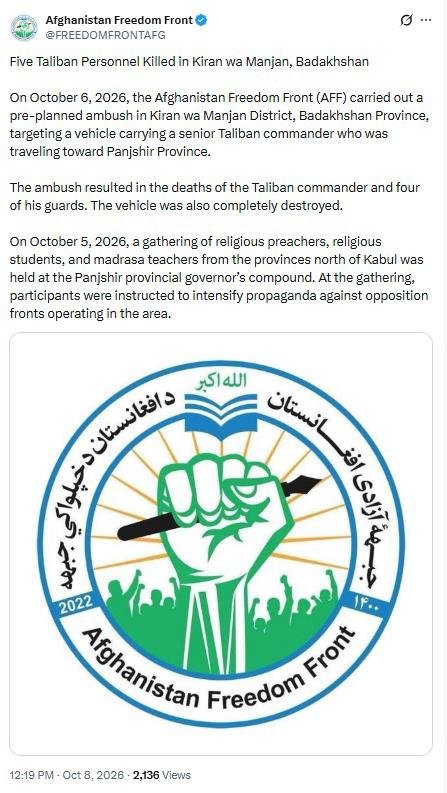
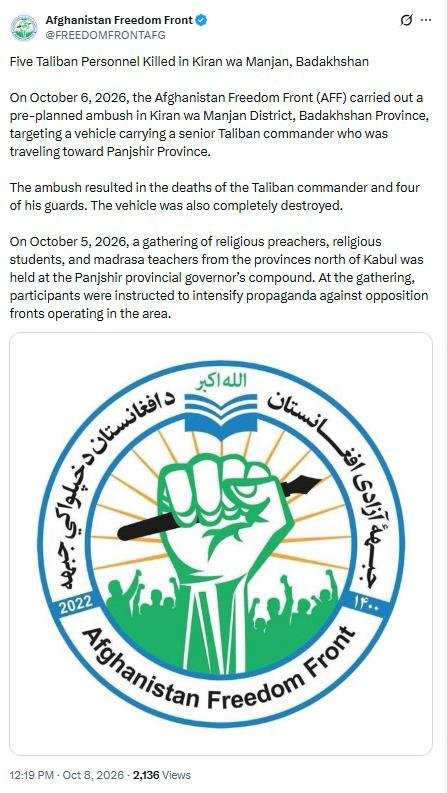
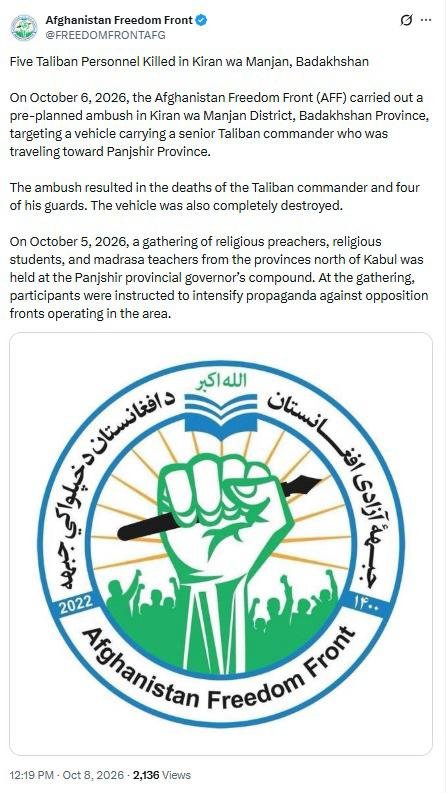
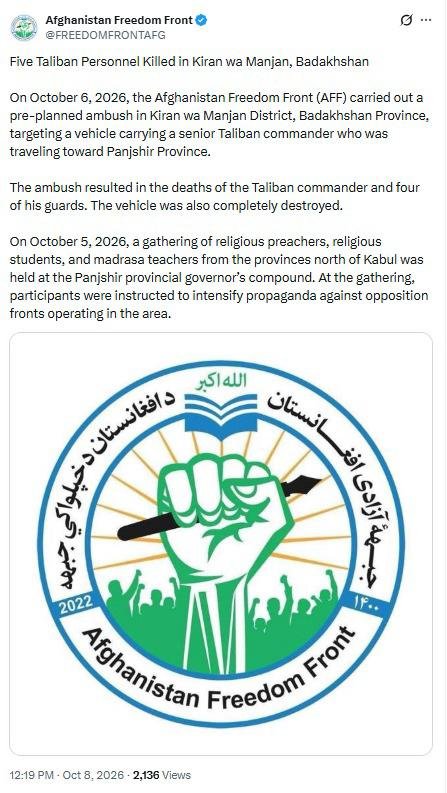
The Afghan Freedom Front (AFF) reported an ambush on October 6 targeting a Taliban commander’s vehicle in Badakhshan. According to the group, the commander and four bodyguards were killed, and the vehicle was completely destroyed.
The AFF also claimed that an operation in Faizabad on October 7 killed four Taliban personnel, including a commander. The group alleged that Taliban forces subsequently carried out arrests, harassment and acts of violence against local residents.
Clashes in Nuristan and Kapisa
The AFF said Taliban forces failed to capture its positions in Kamdesh district of Nuristan on October 7 and retreated following a counterattack.
According to the group, the six-hour clashes left 11 Taliban personnel dead and at least eight wounded.
In a separate operation in Kohistan district of Kapisa on the same day, the AFF claimed its fighters attacked Taliban positions with rockets and machine guns, killing three personnel and injuring two others.
Attacks in Kandahar and Helmand
The Afghanistan United Front (AUF) claimed that one of its operations on October 6 targeted a commander associated with the Taliban’s Taib network in Kandahar, killing the commander, identified as Ezzatullah.
The group also reported four attacks between October 3 and 6 in Arghandab district of Kandahar and Lashkar Gah in Helmand. According to the AUF, the operations killed three Taliban personnel and wounded three others.
Intelligence Officials Targeted in Badakhshan and Nangarhar
The National Resistance Front (NRF) claimed responsibility for an attack targeting the deputy head of Taliban intelligence in Faizabad, Badakhshan. The group identified the official as Safiullah Mutawakkil and said he was killed alongside two bodyguards.
Separately, the National Mobilisation Front (NMF) reported an attack on October 5 targeting the intelligence command at Nangarhar Central Prison in Jalalabad. The group claimed that Waheed Wisal, the prison’s deputy director of investigations, was killed.
The Andarab Resistance Front also reported continuing operations against Taliban forces in Andarab, Badakhshan and Nuristan.
Mineral Transport Convoys Targeted in Bamyan
The Afghan Republic Front reported two consecutive attacks on October 4 and 5 against mineral transport convoys associated with the Taliban authorities in Bamyan.
The group also declared that parties collaborating with Taliban-linked mining operations were legitimate military targets. This position represents the group’s stated justification and does not establish the legal status of any particular target under international humanitarian law.
Resistance Activity Reportedly Expands
The reported incidents across seven provinces suggest a geographically dispersed pattern of claimed armed resistance against Taliban authorities.
The groups have linked their opposition to the Taliban’s restrictive policies, alleged exploitation of natural resources, repression and continuing restrictions on Afghan society.
The latest claims point to continued challenges to the Taliban’s authority in several parts of Afghanistan, although the broader military and political implications remain difficult to assess without independently corroborated information.